
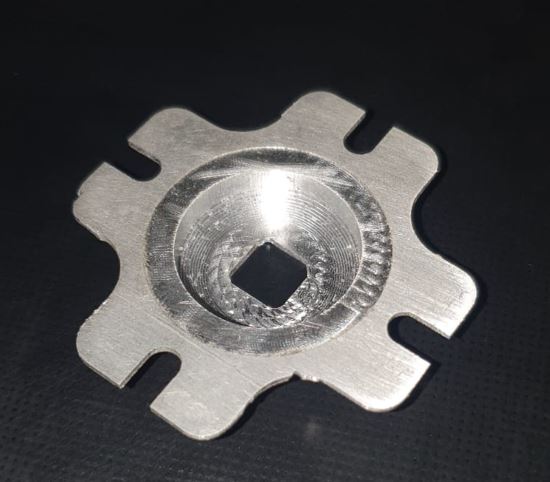
Advanced CNC adaptive toolpath control has become a defining capability in the modern precision manufacturing of complex compressor disk relief grooves, where geometric variation, multi-directional curvature, and micron-level tolerances must coexist within a single machined component. As the aerospace industry evolves toward higher-efficiency engines with increased pressure ratios, the structural and aerodynamic requirements placed on compressor disks grow more demanding each year. Relief grooves play a critical role in stress redistribution, weight optimization, and thermal management within these disks, and their geometry often includes sophisticated blends, sharp-to-smooth transitions, nonuniform curvature, and variable-depth regions. Traditional machining methods, which rely on static toolpaths and manual compensation, cannot keep pace with these complexities. CNC adaptive toolpath control introduces real-time dynamic motion planning, intelligent compensation algorithms, and data-driven adjustment capabilities that allow cutting tools to respond instantly to geometric deviations, material behavior, and machine dynamics. This ensures that each relief groove is machined according to the true engineered form, with exceptional surface quality, structural conformity, and aerodynamic precision.
The core strength of adaptive toolpath control lies in its ability to continuously recalculate and optimize the cutting motion based on live feedback from the machining environment. Rather than following rigid pre-programmed trajectories, the CNC system evaluates tool engagement, spindle load, machine vibration, and positional accuracy in real time. If it detects variations—such as unexpected tool deflection, approaching chatter conditions, or thermal expansion of the workpiece—it automatically adjusts feed rates, tool vectors, and depth of cut. This granular adaptive behavior is essential for machining complex relief grooves, which often include asymmetric geometries, variable wall thicknesses, and compound curvatures that challenge conventional machining processes. Adaptive toolpaths ensure that the tool maintains optimal contact with the material at all times, eliminating chatter marks, preventing overshoot at depth transitions, and minimizing the risk of microstructural damage. As a result, manufacturers achieve precise and consistent groove profiles even when machining high-strength alloys like titanium or nickel superalloys, which typically amplify cutting challenges due to their hardness and heat retention.
One of the key benefits of adaptive toolpath control is its significant improvement in machining efficiency. Traditionally, producing complex relief grooves required multiple roughing and finishing passes, with frequent manual measurement, tool adjustment, and sometimes even hand blending to achieve the desired shape. These manual interventions introduce risk, inconsistency, and increased production cycle times. With adaptive control, the CNC machine combines roughing, semi-finishing, and finishing into a cohesive machining sequence powered by real-time adjustments. Each pass is optimized dynamically, maintaining stable cutting conditions that accelerate material removal while preserving dimensional accuracy. This reduces the total number of tool changes and eliminates the need for repetitive recalibration during machining. Additionally, because adaptive toolpaths maintain cutting stability, tool wear becomes more predictable, further reducing downtime. Manufacturers benefit from shorter cycle times, reduced labor involvement, and improved throughput—critical advantages in aerospace production environments where each compressor disk must meet strict certification requirements.
Surface integrity is another major area where adaptive toolpath control provides measurable value. Relief grooves must not only meet dimensional tolerances but also achieve the smoothness, uniformity, and microstructural soundness needed for long-term engine reliability. Any irregularity or machining-induced stress concentration can weaken the disk or disrupt airflow during operation, leading to performance losses or premature component fatigue. Adaptive toolpaths generate smooth, consistent transitions across changes in curvature or depth, maintaining constant tool pressure and eliminating sudden force spikes that cause surface imperfections. High-speed oscillation control and optimized feed modulation further improve surface texture, reducing roughness levels to meet aerodynamic and structural specifications without requiring secondary finishing operations. In addition, controlled heat management—achieved through intelligent feed modification and optimized coolant flow—prevents thermal cracking or micro-burning in heat-sensitive materials. The resulting surfaces are not only visually cleaner but also structurally robust, supporting improved fatigue life and overall compressor performance.
From a geometric standpoint, compressor disk relief grooves often require the toolpath to navigate narrow regions, steep walls, and multi-plane transitions that cannot be programmed manually with sufficient accuracy. Adaptive toolpath control uses advanced mathematical modeling and curvature analysis to compute optimal tool trajectories that conform exactly to the engineered shape. CAD/CAM systems integrated with adaptive machining modules analyze the groove’s cross-sectional profile, curvature distribution, and blending surfaces, generating toolpaths that maintain a consistent machining orientation. As the tool encounters varying curvature intensities, the system automatically adjusts tool-axis tilt angles and radial engagement to preserve geometric fidelity. This automated approach eliminates the “stair-step” deviations often seen in legacy milling techniques and ensures that the groove follows the intended aerodynamic contour. The value of this precision becomes especially pronounced in high-speed compressors, where even microscopic geometric deviations can alter airflow, raise energy losses, or generate harmful vibrations.
Looking ahead, the future of CNC adaptive toolpath control is poised to become even more powerful as digital manufacturing technologies continue to evolve. With the integration of AI-driven machining strategies, next-generation sensors, digital twins, and predictive modeling, adaptive toolpaths will become more intelligent, self-learning, and fully autonomous. Machine learning algorithms will evaluate tool condition, material feedback, and historical machining data to create predictive toolpaths tailored to each compressor disk. Meanwhile, digital twins will simulate the entire machining cycle, predicting potential errors before machining begins and optimizing cutting parameters for each individual groove geometry. Sensors embedded in tool holders, spindles, and fixtures will provide real-time data on forces, temperature, and vibration, allowing the CNC system to make microsecond-level adjustments for unmatched stability and precision. These advancements will further reduce scrap rates, accelerate production cycles, and unlock new possibilities for even more complex compressor disk designs. As the aerospace industry moves toward lighter, stronger, and more efficient turbomachinery components, advanced CNC adaptive toolpath control will remain a foundational technology—ensuring that compressor disks are manufactured with the precision, reliability, and performance required for the next generation of high-performance engines.