
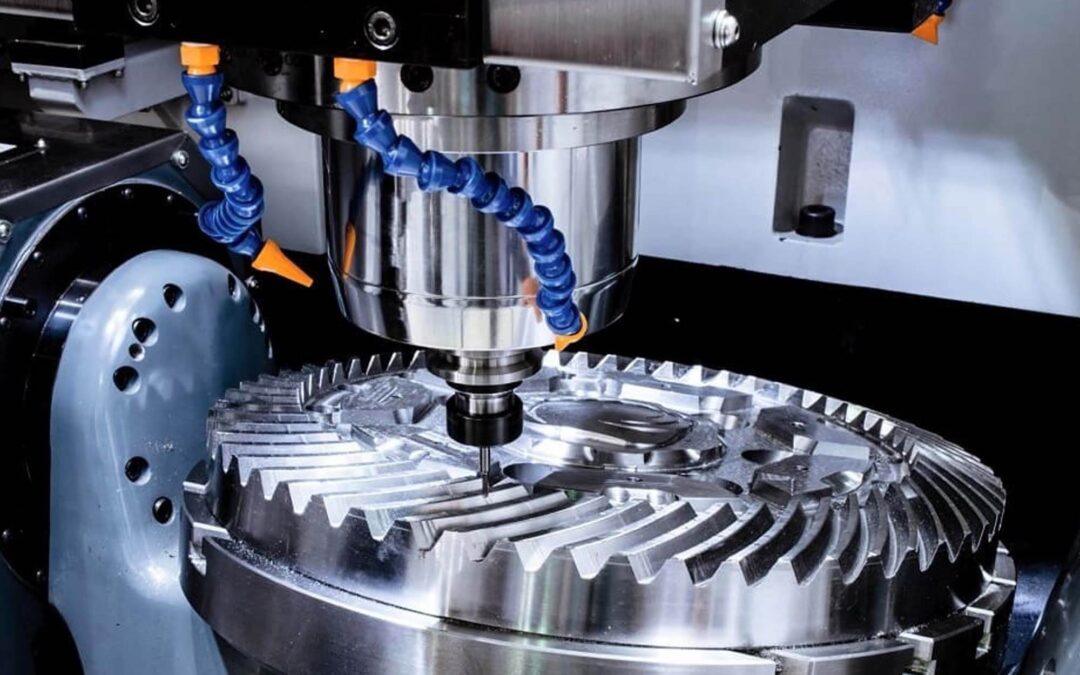
CNC thermal-compensated finishing has emerged as a critical manufacturing innovation for producing distortion-prone turbine rotor pockets with extreme precision and stability. As turbine engines operate under increasingly aggressive thermal and mechanical loads, rotor pockets—responsible for housing blades, seals, and structural interfaces—must meet exceptionally tight tolerances to ensure efficient airflow and durable component performance. However, the machining of these pockets is notoriously complex because the alloys used in turbine rotors, such as nickel-based superalloys and titanium alloys, exhibit significant thermal sensitivity during cutting. Even minor temperature fluctuations can cause dimensional distortion, microstructural changes, or uneven stress distribution. Thermal-compensated CNC finishing responds to this challenge by continuously monitoring temperature, dynamically adjusting toolpaths, and applying predictive compensation algorithms that correct deviations before they affect the final geometry. This advanced approach ensures that rotor pockets are machined to exact specification, regardless of heat generation, thermal drift, or material response, reinforcing structural integrity and supporting long-term engine reliability.
One of the central challenges of machining turbine rotor pockets is the inherent heat buildup generated during high-speed cutting of difficult-to-machine alloys. When subjected to aggressive cutting conditions, these materials tend to expand, contract, and deform microscopically, creating unpredictable variations in pocket dimensions and surface quality. Conventional machining techniques often fail to account for this thermal distortion, resulting in surfaces that fall outside tolerance, forcing rework or scrap. In contrast, CNC thermal-compensated finishing uses integrated thermal sensors, infrared monitoring, and machine-level temperature mapping to measure heat behavior in real time. The CNC controller uses this data to modify tool engagement, feed rates, and spindle dynamics while machining is still in progress. In addition, advanced algorithms predict how heat will affect the geometry several steps ahead, enabling the system to proactively counteract distortion before it occurs. This predictive approach is especially effective in rotor pockets with varying wall thicknesses or deep cavities where heat tends to accumulate, ensuring dimensional accuracy even under challenging thermal conditions.
Another major advantage of thermal-compensated finishing lies in its ability to preserve the microstructural integrity of temperature-sensitive turbine alloys. Excessive heat during machining can cause micro-cracks, work hardening, phase transformation, or surface weakening, all of which compromise the fatigue resistance of turbine rotor pockets. Since these pockets are exposed to intense rotational loads, high vibration frequencies, and extreme temperature gradients during operation, even subtle microstructural changes can reduce component lifespan. CNC thermal compensation addresses this by utilizing optimized coolant strategies, high-efficiency cutting paths, and thermal-stabilized tool engagement that minimize temperature spikes. Continuous spindle-speed modulation and cutting-force balancing further ensure that heat remains within allowable limits. As a result, the final machined pockets exhibit superior surface integrity, consistent grain structure, and reduced residual stress. This is critical for meeting aerospace certification requirements and ensuring that rotor pockets maintain long-term reliability even under aggressive operating cycles.
Beyond accuracy and structural integrity, CNC thermal-compensated finishing significantly enhances workflow efficiency in turbine rotor production. Traditional manufacturing requires multiple machining stages, frequent part cool-down periods, manual inspection cycles, and iterative re-machining to correct thermal distortion. These steps slow production, increase labor demand, and introduce opportunities for human error. With thermal compensation, machining can be performed continuously with fewer interruptions, as the CNC system independently handles heat response and geometric correction. Automated probing systems monitor pocket dimensions at key intervals, feeding real-time measurement data back into the thermal compensation engine. This closed-loop machining environment prevents cumulative errors and eliminates the need for manual adjustments. Manufacturers benefit from reduced cycle times, lower scrap rates, and more predictable production schedules. These efficiencies are especially valuable in mass-production environments for turbine components, where consistency, traceability, and repeatability are essential for meeting global aerospace standards.
CNC thermal-compensated finishing also plays a transformative role in improving the aerodynamic and mechanical performance of the turbine rotor assembly. Rotor pockets must interface perfectly with blades and seals to ensure balanced rotation, minimal leakage, and optimal aerodynamic flow. Distortion during machining—even at micron scale—can lead to blade misalignment, vibration amplification, or energy loss during operation. Thermal-compensated finishing produces pockets with precisely controlled geometry, smooth contour transitions, and uniform dimensional stability. The resulting surfaces improve aerodynamic flow paths and reduce turbulence, contributing to higher engine efficiency and lower fuel consumption. Additionally, accurate pocket geometry helps maintain uniform stress distribution across the rotor, preventing hotspots and reducing fatigue loading on attached components. With smooth surface finishes achieved through controlled thermal machining, pockets also exhibit improved compatibility with advanced coatings and thermal barrier layers, which further enhance performance and extend service life.
Looking to the future, the capabilities of CNC thermal-compensated finishing are poised to expand even further as intelligent manufacturing technologies continue to evolve. The integration of AI-driven compensation engines, adaptive thermal modeling, sensor-embedded tool systems, and predictive material behavior analysis will push machining precision to unprecedented levels. Artificial intelligence will analyze large datasets from previous machining cycles to predict heat patterns for each specific part geometry, enabling the CNC system to choose optimal toolpaths, cooling strategies, and spindle dynamics tailored to the rotor pocket’s unique characteristics. Digital twin technology will allow manufacturers to virtually simulate thermal distortion and optimize compensatory actions before machining begins, reducing risk and improving first-pass accuracy. Advanced tool coatings and hybrid cooling systems—such as cryogenic liquid nitrogen delivery combined with micro-lubrication—will further reduce heat accumulation in difficult-to-machine superalloys. As aerospace engines become more efficient, lighter, and capable of higher thrust-to-weight ratios, CNC thermal-compensated finishing will remain essential. It will continue to ensure that rotor pockets meet the demanding requirements of next-generation turbine technology, delivering unparalleled precision, durability, and performance in some of the most extreme mechanical environments in modern industry.