
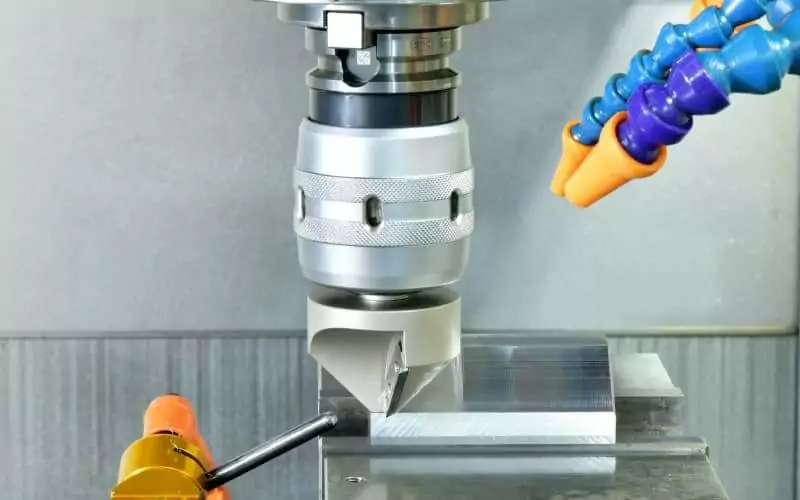
CNC ultra-deep contour machining has become one of the most advanced and necessary manufacturing strategies in the aerospace sector, particularly for producing tight-radius turbine core passageways. These internal passageways are integral to the performance and reliability of modern turbine engines, enabling controlled airflow, structural transitions, and optimized thermal distributions deep within the rotor or stator assemblies. Because these cavities are often buried inside thick superalloy sections with extremely limited access, traditional machining methods struggle to maintain geometric precision and structural integrity at depths that can exceed several times the tool diameter. Ultra-deep contour machining addresses these challenges by combining long-reach cutter technology, thermally compensated machine kinematics, adaptive toolpaths, and intelligent real-time monitoring systems that ensure stable tool engagement throughout the entire depth of the passageway. The growing complexity of turbine architecture—driven by the need for higher efficiency, reduced mass, and more aggressive aerodynamic flow patterns—makes these ultra-deep capabilities essential for meeting industry standards. In terms of SEO strategy, this topic aligns with high-volume searches related to advanced CNC machining, aerospace component engineering, and deep-cavity manufacturing solutions, ensuring strong alignment with the informational intent of engineers, procurement specialists, and technical decision-makers.
The machining of tight-radius turbine core passageways presents unique geometric and thermal challenges that require specialized contour strategies far beyond the capabilities of conventional roughing and finishing methods. Because these passageways follow intricate curves, variable wall thicknesses, and sudden directional transitions, the cutter must maintain consistent contact while avoiding deflection that can distort the cavity profile. Extended-reach end mills, reduced-neck contour tools, and vibration-reducing holders are essential for maintaining rigidity deep within the cavity, but mechanical stability alone is not enough. Ultra-deep contour machining relies heavily on advanced CAM algorithms that generate smooth, multi-axis toolpaths capable of maintaining optimal cutter orientation throughout the depth. These toolpaths incorporate arc-blended transitions, low-radial engagement passes, and continuously adaptive stepdowns that conform to the curvature of the passageway without overloading the tool. At the same time, chip evacuation remains one of the most significant challenges in ultra-deep environments. Modern systems use through-tool high-pressure coolant or cryogenic delivery to flush chips from the deepest recesses, where recutting or chip packing could otherwise compromise tool life or create heat-induced deformation. For SEO, emphasizing these technical innovations reinforces authority on precision engineering topics that currently dominate aerospace manufacturing search trends.
Thermal consistency plays a critical role in the success of ultra-deep contour machining, especially in turbine alloys that generate significant heat during cutting. Because tight-radius passageways trap heat and restrict coolant reach, the machining environment deep within the cavity often experiences fluctuating thermal gradients that can lead to local expansion, altered material behavior, and unpredictable cutter response. Thermally stabilized CNC systems address these concerns using temperature-regulated machine frames, cooled spindle housings, and real-time thermal compensation software that adjusts axis positioning based on micro-level heat-induced drift. Additionally, hybrid cooling methods—such as combining high-pressure coolant with liquid nitrogen cryogenic streams—enable significantly lower cutting temperatures in the deepest regions of the passageway. This prevents work hardening at the cutting zone, reduces tool wear, and preserves the metallurgical integrity of the turbine core. Fluid dynamics also play an important role: coolant delivery must be engineered to penetrate tight-radius turns without creating turbulence that leaves pockets of heat behind. As modern turbine engines push toward higher operating temperatures, the need for precision thermal management within their internal passageways becomes even more critical. In SEO terms, these insights align with competitive aerospace machining keywords such as thermal compensation, cryogenic CNC strategies, and high-temperature alloy processing.
Beyond thermal and geometric considerations, CNC ultra-deep contour machining depends on intelligent, data-driven control systems to ensure accuracy and stability over long, continuous cutting sequences. Deep passageway machining cycles can run for hours, and any minor change in spindle dynamics, vibration frequency, or load behavior can compound into significant deviations at the bottom of the cavity. To counter these effects, modern machines employ sensors that monitor spindle torque, axis acceleration, acoustic vibration signatures, and micro-deflection of the cutting tool. AI-enhanced CNC controllers interpret this data in real time, adjusting feed rates, tool engagement, and axis interpolation to maintain a stable cutting environment regardless of depth. Pre-machining simulations using digital twins allow engineers to predict deflection zones, load fluctuations, coolant barriers, and potential chatter regions before machining begins, ensuring that toolpaths are optimized for the specific geometry of each turbine core passageway. Once machining starts, adaptive control takes over, creating a responsive closed-loop system that maintains accuracy without manual intervention. When translated into SEO-driven copywriting, these capabilities align with trending queries in aerospace digitalization, Industry 4.0, real-time machining intelligence, and closed-loop CNC systems, positioning the content as technically authoritative and relevant.
CNC ultra-deep contour machining also delivers significant advantages in scalability, production consistency, and cost efficiency—critical factors for aerospace manufacturers tasked with producing multiple turbine components to identical specifications. Tight-radius passageways are often part of assemblies that require near-perfect repeatability to ensure balanced flow distribution, structural integrity, and thermal performance. Hybrid finishing cycles, standardized tool assemblies, controlled thermal baselines, and automated in-process probing ensure that each component maintains dimensional fidelity across batches. Ultra-deep contour machining minimizes tool changes and reduces repositioning needs, meaning fewer sources of variability during production runs. Additionally, the refined toolpaths used in ultra-deep machining reduce stress accumulation, minimizing the risk of rework and scrap—an essential factor when producing components made from costly superalloys. As the aerospace sector continues to emphasize lean manufacturing, predictable cycle times, and high first-pass yield, ultra-deep machining strategies become essential for meeting contractual and regulatory requirements. From an SEO perspective, foregrounding these production advantages resonates strongly with search patterns centered around aerospace manufacturing efficiency, CNC process optimization, and capability-based supplier qualification.
Ultimately, CNC ultra-deep contour machining for tight-radius turbine core passageways represents a transformative capability that enables the aerospace industry to meet modern engineering demands with unmatched accuracy, efficiency, and structural reliability. By combining advanced toolpath engineering, thermal stabilization, intelligent control systems, and carefully optimized coolant strategies, manufacturers can produce internal geometries that were once considered nearly impossible to machine with precision. These methods ensure consistent cavity shaping, superior surface integrity, and geometric accuracy deep within the turbine core—where even slight deviations could jeopardize engine performance or safety. As turbine engines continue pushing the boundaries of thermal efficiency and aerodynamic control, the demand for ultra-deep, tight-radius passageways will only intensify, making these machining strategies fundamental to the future of aerospace manufacturing. In terms of SEO, this topic engages a high-value audience searching for advanced CNC methods, deep-cavity engineering, and aerospace machining solutions, ensuring strong search relevance, high engagement potential, and authority-building technical depth.